5 Signs Your Nervous System Is Stuck in Overdrive (And What Chronic Stress Is Really Doing to Your Body)
You’re not dramatic. You’re not lazy. You’re not “just tired.”
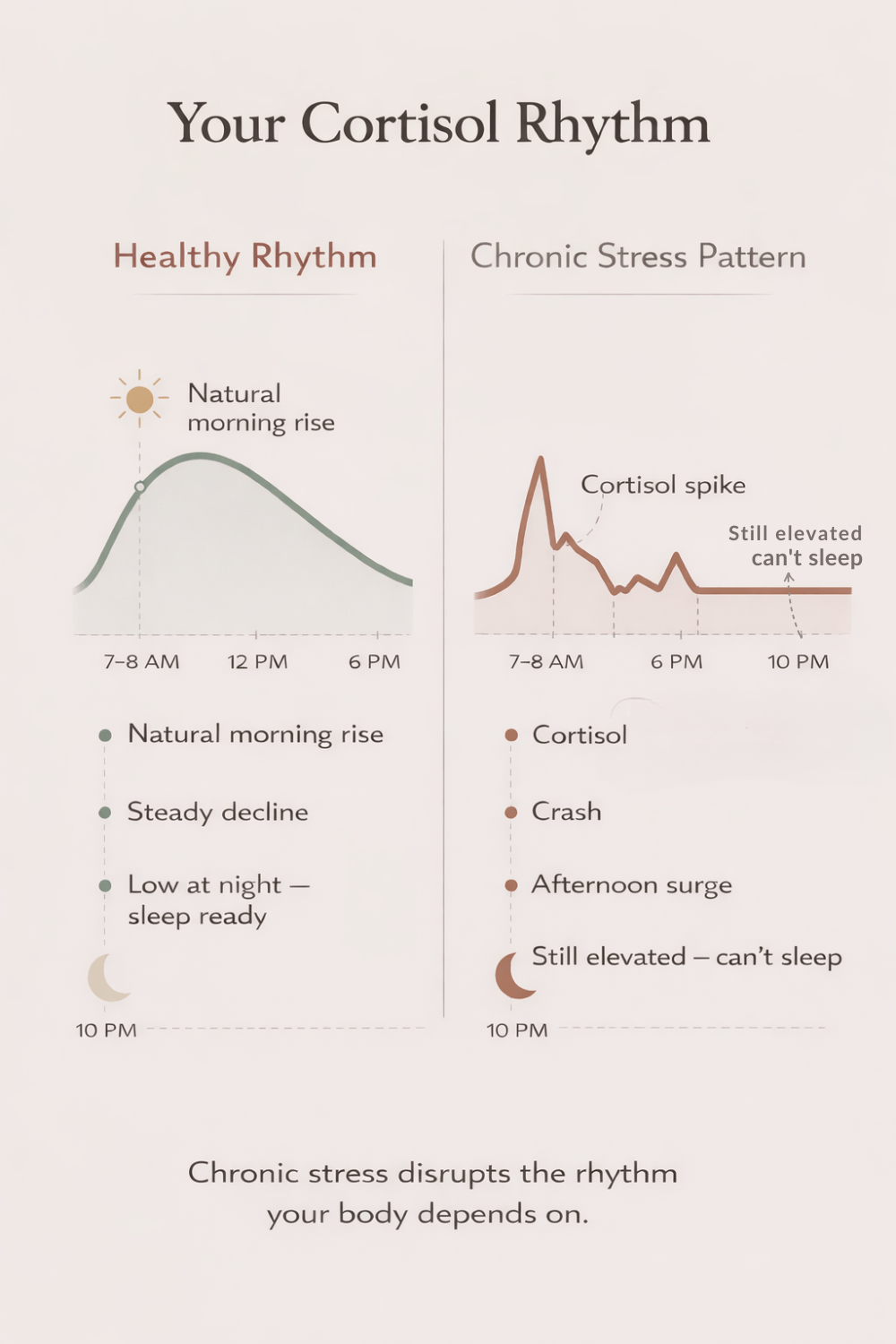
If you’ve been waking up exhausted, snapping at the people you love, watching your weight shift without changing anything, or feeling like your brain is wrapped in cotton — there’s a physiological reason for that. And it has a name: chronic stress response.
Most women carrying this kind of load are running on cortisol — their body’s primary stress hormone — at levels that were never meant to be sustained. The result isn’t just “feeling stressed.” It’s a cascade of physical symptoms that your doctor might not connect to stress at all.
This article breaks down exactly what’s happening in your body, how to recognize the signs, and what actually helps — without requiring you to quit your job or book a month-long retreat.
First: What Is Cortisol, Actually?
Cortisol is produced by your adrenal glands in response to stress — physical, emotional, or perceived. In the short term, it’s protective. It sharpens your focus, mobilizes energy, suppresses inflammation, and gets you through the crisis.
The problem is that your nervous system can’t always distinguish between a physical threat and a back-to-back meeting schedule, a passive-aggressive email, or the 11pm mental loop of everything you didn’t finish today.
When cortisol is chronically elevated — meaning your body is rarely returning to a calm baseline — it stops being protective and starts causing damage. Here’s what that looks like in the body.
5 Signs Your Nervous System Is Stuck in Overdrive
1. You’re Tired But Wired (Or Just Exhausted All the Time)
Cortisol follows a natural daily rhythm — highest in the morning to wake you up, tapering off toward evening so melatonin can rise and you can sleep. When you’re chronically stressed, this rhythm dysregulates.
You might find yourself:
• Alert and anxious at 10pm when you desperately want to sleep
• Hitting the pillow and replaying your to-do list for 45 minutes
• Waking at 2–4am and not knowing why
Or alternatively, dragging yourself through the morning no matter how long you slept, needing caffeine to feel functional, and experiencing a wall of fatigue that hits hard between 2–3pm.
Both patterns point to HPA axis dysregulation — your hypothalamic-pituitary-adrenal axis, which governs your stress response cycle, is out of rhythm.
2. Your Weight Is Shifting — Especially Around Your Midsection
This is one of the most frustrating high cortisol signs, because it can happen even when your diet and activity levels haven’t changed.
Cortisol directly influences fat storage, especially visceral fat around the abdomen. It also:
• Raises blood sugar (your body thinks it needs emergency fuel)
• Spikes insulin, which drives fat storage
• Increases cravings for sugar and refined carbohydrates (your brain is signaling it needs fast energy)
If you’re eating well and exercising but your body composition keeps shifting, especially through perimenopause, chronically elevated cortisol is a significant and underdiagnosed factor.
3. Your Skin and Gut Are Sending You Messages
The gut-brain-skin axis is real, and cortisol sits at the center of it.
In the gut, chronic stress:
• Increases intestinal permeability (“leaky gut”)
• Disrupts the microbiome, reducing good bacteria
• Slows digestion and worsens bloating, cramping, and irregularity
On the skin, cortisol:
• Breaks down collagen (accelerating aging)
• Increases sebum production (triggering breakouts)
• Impairs the skin’s barrier function and healing
If you’re seeing more breakouts, dullness, or digestive symptoms that seem to get worse during stressful periods — that’s your body keeping score.
4. Your Hormones Feel Off — And They Probably Are
Cortisol and reproductive hormones compete for the same precursor: pregnenolone. When cortisol demand is chronically high, your body prioritizes cortisol production — sometimes at the expense of progesterone, estrogen, and DHEA.
The result can look like:
• Irregular or worsening PMS
• Heavier or more painful periods
• Worsening anxiety in the luteal phase (week before your period)
• Low libido
• Difficulty conceiving
Learning how to balance hormones starts with addressing the cortisol load. You can’t supplement or eat your way out of a dysregulated stress response.
5. You’re Running on Reactivity
When the nervous system is chronically activated, the prefrontal cortex — the rational, calm, decision-making part of your brain — goes offline. The amygdala takes over. The amygdala is reactive, threat-scanning, and fast.
This is why you might:
• Snap at your kids or partner over small things and immediately feel terrible
• Feel overwhelmed by decisions that should be minor
• Find it hard to feel present or enjoy anything
• Cry unexpectedly or feel emotional in ways that don’t match the situation
This isn’t a character flaw. It’s a nervous system stuck in fight-or-flight, doing exactly what it was designed to do — just in a context that never stops.
What Are Adaptogens — And Why Do They Actually Help?

Adaptogens are a class of herbs and fungi that help the body “adapt” to stress — not by numbing it, but by modulating the HPA axis response so the cortisol spike is less severe and recovery is faster.
They don’t sedate you. They don’t hype you up. They support balance — which means if your cortisol is too high, they help bring it down; if your energy is depleted, they support recovery.
The key adaptogens for women managing chronic stress:
Ashwagandha (Withania somnifera)
The most studied adaptogen for cortisol reduction. Multiple clinical trials show ashwagandha benefits for women include significantly reduced cortisol levels, improved sleep quality, reduced anxiety, and better thyroid function. It works by suppressing the HPA axis’s overreaction to stressors.
Reishi (Ganoderma lucidum)
Known as the “mushroom of immortality” in traditional medicine, Reishi is primarily adaptogenic through its calming effect on the nervous system. It supports sleep quality, immune regulation, and has anti-inflammatory properties relevant to the chronic stress-inflammation cycle.
Lion’s Mane (Hericium erinaceus)
A nootropic mushroom that supports nerve growth factor (NGF) — meaning it supports the actual repair and growth of neurons. Relevant for the brain fog, memory issues, and mental fatigue that come with high cortisol. Also associated with reduced anxiety and depression symptoms in recent studies.
Cordyceps (Cordyceps militaris)
Supports cellular energy production at the mitochondrial level — the kind of deep energy that caffeine can’t manufacture. Particularly useful for the exhaustion pattern of burnout, where stimulants stop working and you’re running on empty.
Nervous System Regulation for Busy Women: What Actually Works
Nervous system regulation doesn’t mean meditation retreats and 90-minute morning routines. For women carrying a full life, it means building small, strategic inputs throughout the day that signal safety to the nervous system.
The goal is to interrupt the cortisol cycle — not once dramatically, but repeatedly and consistently.
Physiological Inputs (Your Body Leads, Your Mind Follows)
Extended exhale breathing: Breathe in for 4 counts, out for 6–8. The extended exhale activates the vagus nerve and parasympathetic response. 5 minutes is clinically meaningful.
Morning light exposure: Cortisol should peak within the first hour of waking. Natural light (even 5 minutes outside) supports this healthy morning cortisol rhythm and anchors your circadian clock.
Cold water to the face or wrists: Activates the dive reflex, rapidly slowing heart rate and calming the nervous system.
Movement that’s not punishing: Walking, yoga, and low-intensity movement lower cortisol. Intense HIIT or heavy lifting when you’re already depleted can spike cortisol further. Match your movement to your energy
Nutritional Inputs
Avoid skipping breakfast: Fasting in the morning when cortisol is already high amplifies the stress response. Protein in the morning stabilizes blood sugar and buffers the cortisol spike.
Limit high-caffeine stimulants in the afternoon: Standard coffee spikes cortisol. Switching to a coffee alternative or lower-caffeine option in the afternoon is one of the most impactful single changes depleted women can make.
Magnesium-rich foods: Depleted by stress; critical for GABA production (your brain’s calming neurotransmitter). Dark chocolate, leafy greens, pumpkin seeds.
Adaptogenic Support
This is where supplementation becomes strategic rather than hopeful. Adaptogens work cumulatively — most require 4–8 weeks of consistent use to show full effect. They’re not a quick fix; they’re a long-term recalibration tool.
The most effective delivery formats for busy women:
Morning: a clean, focused energy support to replace the cortisol spike of standard coffee — steady clarity instead of the wired-then-crashing pattern
Evening: stimulant-free mushroom and ashwagandha support to help the nervous system downshift, so cortisol can taper the way it's meant to and sleep comes easier
Two decades in healthcare taught me to take physical symptoms seriously. It still took me embarrassingly long to apply that to myself. I didn't put these symptoms together myself for a long time either. I treated my skin, my gut, my mood, and my energy as four separate problems and tried to fix each one individually — which is exhausting and doesn't work, because they were never separate to begin with.
What I Use: A Note on Products
I'm an affiliate for Tranont, and I want to be straightforward about that — because I also wouldn't recommend something I don't stand behind.
There are two I actually use every day, at the two ends of the day where my nervous system needs the most help:
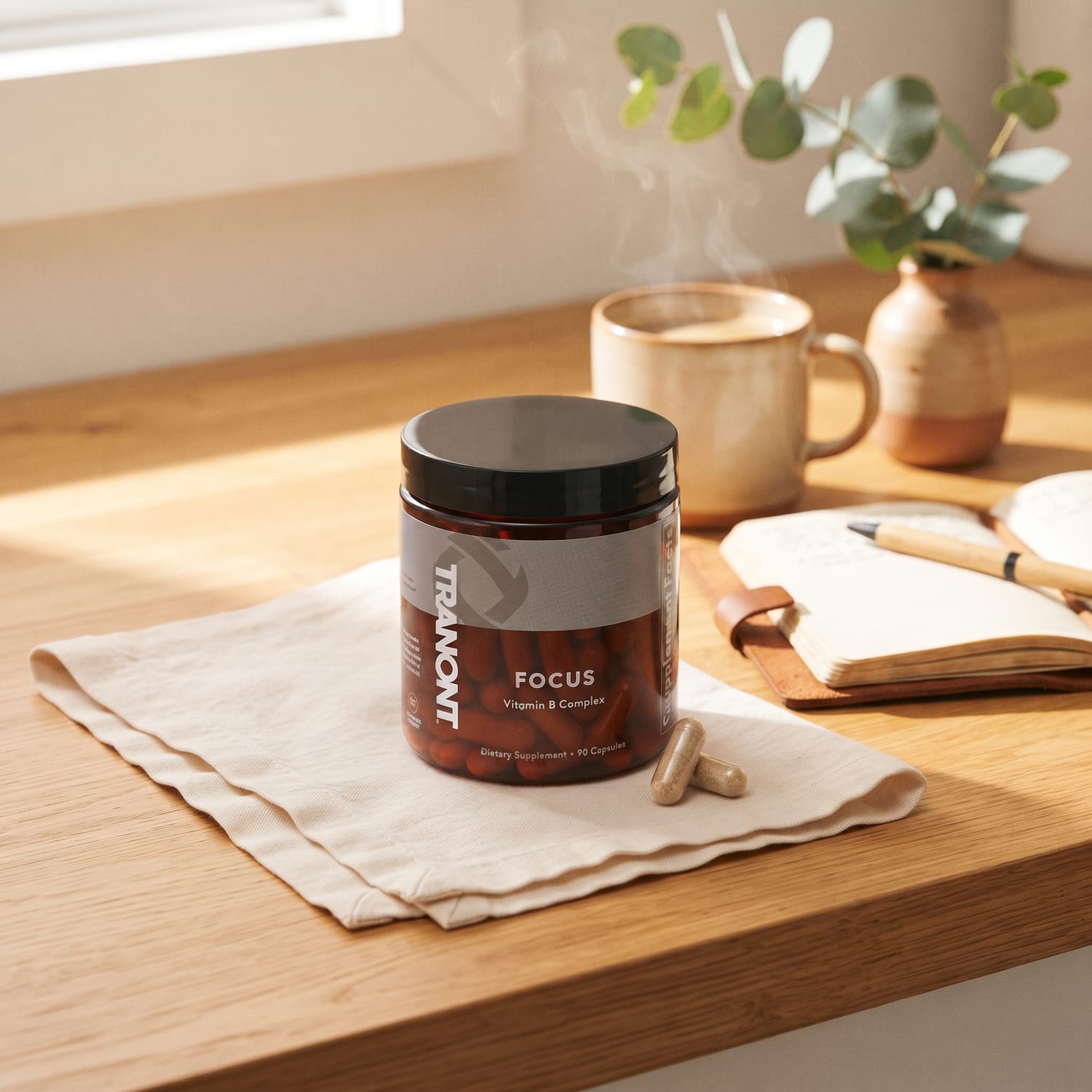
The two products I use daily:
This is what I reach for instead of leaning on a second and third coffee to feel human. It gives me clean, steady energy and a clear head through the morning and into that 2-to-3pm wall, without the wired-then-crashing feeling standard coffee always left me with. On the days my brain feels wrapped in cotton, it's the difference between white-knuckling through my to-do list and actually moving through it.
This is the one that finally helped me come down at night. It's an ashwagandha-and-mushroom brew I make once the day is done — the signal my body reads as you can stop now. For years I was alert and anxious at 10pm when I wanted nothing more than to sleep. Those ten quiet minutes with a warm mug are what let my system finally downshift, so I fall asleep faster and stop waking at 3am wondering why.
Two decades in healthcare made me cautious about what I put my name on. These are the two that earned it.
The Bottom Line
Chronic stress isn’t just a feeling. It’s a physiological state with measurable effects on your weight, skin, gut, hormones, sleep, and mood. Understanding that is the first step — because it reframes the entire conversation from “I need to push through” to “I need to reduce the cortisol load.”
You don’t need a complete life overhaul. You need consistent, strategic inputs that tell your nervous system it’s safe to come down from the ledge.
Start there. Your body is not working against you. It’s been working incredibly hard to protect you — and it needs support, not more pressure.
Disclaimer
The content on The Cortisol Edit is intended for informational and educational purposes only. Nothing published on this site constitutes medical advice, and no content here should be used as a substitute for the advice, diagnosis, or treatment of a qualified healthcare professional. We do not diagnose, treat, cure, or prevent any health condition or disease.
If you are experiencing symptoms that concern you, please consult your doctor or a licensed healthcare provider before making any changes to your diet, supplement routine, or lifestyle. This is especially important if you are pregnant, breastfeeding, taking prescription medications, or managing an existing health condition.
Some posts on this site contain affiliate links. This means that if you click a link and make a purchase, The Cortisol Edit may earn a small commission — at no additional cost to you. We only reference products we genuinely believe in, and affiliate relationships never influence our editorial content or recommendations.
Individual results from any supplement, dietary change, or wellness practice will vary. What works for one person may not work for another, and nothing on this site should be interpreted as a guarantee of results.
Supplement statements referenced on this site have not been evaluated by the Food and Drug Administration.